Getting rid of junk or construction debris in West Palm Beach isn’t as simple as filling up a roll-off dumpster. Both Florida state laws and Palm Beach County regulations strictly limit what can legally be tossed—especially items considered hazardous, heavy, or environmentally damaging. Whether you’re clearing out a property, remodeling, or managing a cleanup project, understanding how to dispose of restricted materials is key to staying compliant and avoiding extra fees.
This local guide breaks down which items you can’t place in a dumpster in West Palm Beach—and explains your safe, legal alternatives.
Legally Prohibited Items in West Palm Beach Roll-Off Dumpsters
• Hazardous chemicals (cleaners, solvents, acids, corrosives)
• Wet paint and paint thinners
• Batteries (lithium-ion, car batteries, rechargeable)
• Tires
• Electronics (TVs, computers, monitors, etc.)
• Medical waste (sharps, biohazards)
• Pesticides and herbicides
• Asbestos-containing materials
• Automotive fluids (oil, antifreeze, fuel)
• Fluorescent bulbs and mercury-containing items
• Explosives and flammables (fireworks, ammo, gas)
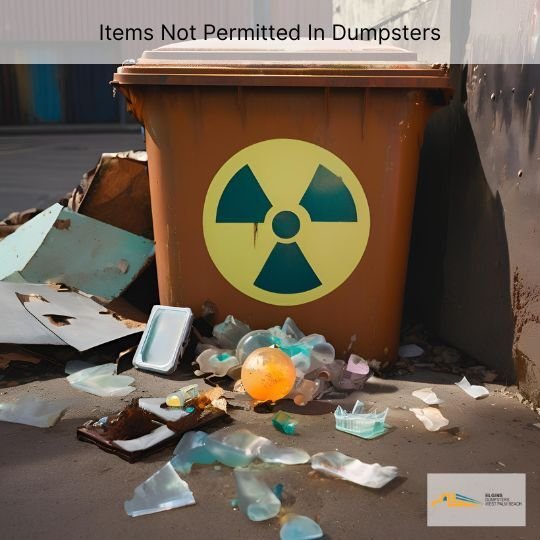
• Radioactive materials (e.g., smoke detectors)
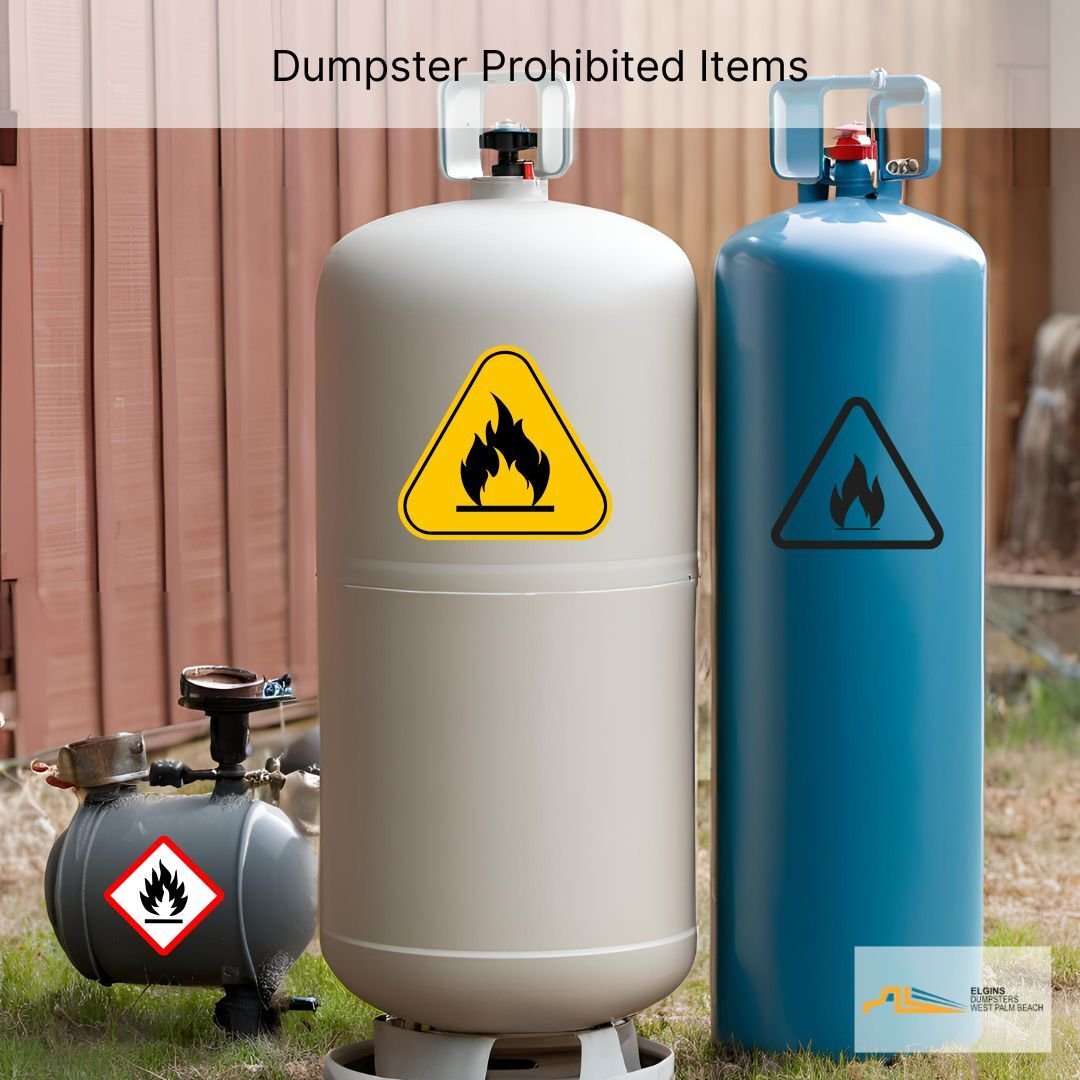
• Propane tanks and pressurized cylinders
What Defines Hazardous Waste in Florida?
In Florida, hazardous waste is legally defined as any substance that is flammable, corrosive, reactive, or toxic, and that poses a potential threat to human health or the environment. Common examples include solvents, pesticides, chemical cleaners, wet paint, batteries, and medical waste. These materials fall under the Resource Conservation and Recovery Act (RCRA) and are regulated by the Florida Department of Environmental Protection (FDEP).
If a material can burn, explode, corrode metal, or release toxic chemicals into soil or water, it qualifies as hazardous—and must not be placed in a roll-off dumpster under any circumstance.
Learning how to dispose of hazardous waste properly isn’t just about avoiding penalties—it’s about protecting landfill safety, waste workers, and the natural ecosystems of Palm Beach County.
Statewide Restrictions Enforced in Palm Beach County
Florida’s hazardous waste laws apply to all counties equally, including Palm Beach County. This means materials such as paints, motor oil, fluorescent bulbs, pesticides, asbestos, and e-waste are strictly prohibited from dumpster disposal—regardless of who your dumpster rental provider is.
Palm Beach County enforces these rules through the Solid Waste Authority (SWA) and offers Household Hazardous Waste (HHW) drop-off sites throughout the county. These facilities are available to residents at no cost for proper disposal of banned items.
The county also bans tires and many types of batteries from landfills due to environmental concerns like chemical leakage and methane gas buildup. If you’re unsure how to dispose of something, checking with SWA is the safest option.
Improper disposal can result in rejected dumpster service, fines, or environmental citations, so it’s always smart to verify whether an item qualifies as hazardous before tossing it into a roll-off container.
Items Commonly Refused by West Palm Beach Dumpster Rental Companies
In addition to statewide and county-level restrictions, many dumpster rental providers in West Palm Beach have their own policies that limit what you can throw away. These rules are in place to protect workers, avoid environmental hazards, and prevent damage to dumpsters or disposal facilities.
Appliances and Electronics
Large household appliances and electronics are often refused by dumpster companies, even though they may not be classified as hazardous. Items like refrigerators, dishwashers, washing machines, and dryers are bulky, heavy, and may contain refrigerants or components that require special disposal procedures.
Electronic waste—including computers, TVs, printers, and monitors—also poses challenges due to internal materials like lead, mercury, and other toxic elements. These items usually must be recycled through e-waste collection programs.
If you’re unsure how to dispose of electronics or appliances in West Palm Beach, check with your rental provider or use a drop-off site approved by the Solid Waste Authority (SWA) of Palm Beach County.
Food Waste and Yard Debris
Though not hazardous, food waste and organic materials are typically not permitted in roll-off dumpsters. Food scraps can attract vermin, create unpleasant odors, and interfere with landfill sorting systems.
To find out how to dispose of food waste or green waste in West Palm Beach, you can utilize SWA’s green waste drop-off programs or take advantage of curbside yard waste collection services offered to residential areas.
Gas Cylinders, Explosives, and Radioactive Waste
Dumpster companies in West Palm Beach do not accept any items that pose a combustion or contamination risk. This includes:
Pressurized propane tanks and gas cylinders
Fireworks, ammunition, or firearm-related items
Road flares or any explosive material
Radioactive items, including smoke detectors containing small isotopes
These materials can ignite or explode during transport or compaction and are a major safety risk. Never attempt to dispose of them in a roll-off container.
To stay compliant and safe, ask our team at Elgins Dumpsters West Palm Beach for a list of banned items—or reach out to the Solid Waste Authority of Palm Beach County for information on how to dispose of hazardous or sensitive materials properly.
Palm Beach County Waste Disposal Guidelines
Local Drop-Off Facilities for Hazardous Waste
If you’re wondering how to dispose of hazardous waste in West Palm Beach, Palm Beach County offers a network of collection sites managed by the Solid Waste Authority (SWA). These facilities are specifically designed to accept materials that are banned from roll-off dumpsters, including:
Household cleaners and chemical products
Paints, stains, and solvents
Automotive fluids like oil, antifreeze, and brake fluid
Fluorescent tubes and compact fluorescent bulbs
Pesticides, herbicides, and garden chemicals
The main drop-off location for residents in West Palm Beach is:
SWA Home Chemical and Recycling Center – Central County
6161 N Jog Road, West Palm Beach, FL 33412
These sites are free for residents, but you’ll need to show proof of Palm Beach County residency. Commercial or contractor-generated hazardous waste is not accepted at these facilities and requires a separate disposal arrangement.
Special Considerations for Tires, Paint, and Batteries
Some common items may not seem hazardous at first—but they are restricted in dumpsters due to special handling requirements. These include:
Tires: Landfills do not accept tires due to the fire hazard and methane gas they can trap. You must take tires to a tire retailer or a permitted recycling location.
Paint: Wet paint is considered hazardous and must be dropped off at an SWA chemical collection center. If the paint is completely dried, some providers may allow it in regular trash—but always check first.
Batteries: Non-alkaline batteries like lithium-ion, lead-acid, and rechargeable types are regulated due to their chemical content. These should be recycled at a hazardous waste center or local electronics recycling event.
Knowing how to dispose of these materials properly helps protect both the environment and your wallet by avoiding rejected loads or extra service fees.
West Palm Beach Mattress and Bulk Item Rules
In Palm Beach County, mattresses and other large household items aren’t outright banned from dumpsters—but rental companies may charge additional fees due to their size and the effort required to handle them. Others may prohibit them altogether.
For residential customers, SWA provides free bulk waste pickup for items like:
Mattresses and box springs
Sofas and upholstered furniture
Large household items not classified as construction debris
Bulk pickup in West Palm Beach is typically available by appointment or on scheduled days, depending on your service area. Place items neatly at the curb and follow any posted guidelines.
Before putting a bulky item in a dumpster, always check with your provider—and if you’re unsure how to dispose of a mattress in Palm Beach County, start by contacting SWA or your municipal waste department.
What to Do With Items You Can’t Throw in a Dumpster
Local Alternatives for Proper Disposal
If you’re dealing with materials that can’t be placed in a roll-off dumpster in West Palm Beach, there’s no need to take risks. Palm Beach County, through the Solid Waste Authority (SWA), offers several safe and responsible ways to manage restricted items:
Household Hazardous Waste (HHW) Drop-Off
SWA operates seven Home Chemical and Recycling Centers (HCRCs) throughout the county. These facilities accept items like paints, solvents, pesticides, batteries, and automotive fluids—at no cost to residents.
Electronics Recycling
Outdated or broken electronics—such as TVs, laptops, printers, and phones—can be dropped off at HCRCs or during special e-waste collection events organized throughout the year.
Bulk Item Collection
Large, non-hazardous items like mattresses, box springs, and furniture can be scheduled for free curbside pickup in many West Palm Beach neighborhoods. Visit the SWA’s website to check your collection days or to request a bulk pickup.
Retail Take-Back Programs
Many local hardware and electronics retailers will accept items like used batteries, fluorescent bulbs, propane tanks, and even appliances—especially when purchasing replacements.
Still unsure how to dispose of a particular item in Palm Beach County? Start with SWA—they’ll direct you to the correct drop-off site or program for your specific waste type.
Contact Information for Palm Beach County Solid Waste Authority
For accurate disposal guidance, bulk scheduling, and hazardous waste drop-off details, contact the Solid Waste Authority of Palm Beach County:
???? Address: 7501 N Jog Road, West Palm Beach, FL 33412
☎️ Phone: 561-640-4000
???? Website: https://www.swa.org
Whether you’re managing home renovations or clearing out bulky waste, the SWA can help you understand how to dispose of restricted materials the right way—safely, legally, and efficiently.